Subtraction Timed Tests | Within 20: A Designer's Resource for Educational Clarity
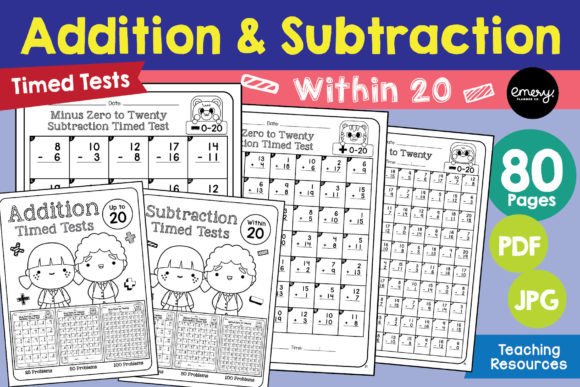
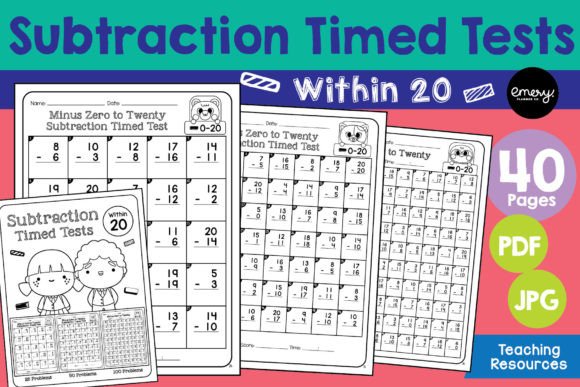
In the realm of visual communication, the most impactful design often solves a specific, practical problem with elegant efficiency. This principle extends beyond branding and marketing into the vital field of educational resources, where clarity, structure, and visual hierarchy are not just desirable but essential. The Subtraction Timed Tests | Within 20 resource exemplifies this, offering a meticulously structured tool designed to build foundational math fluency. For designers and creators, it serves as a case study in how to package functional content for maximum usability and aesthetic appeal.
The Role of Structure in Effective Visual Communication
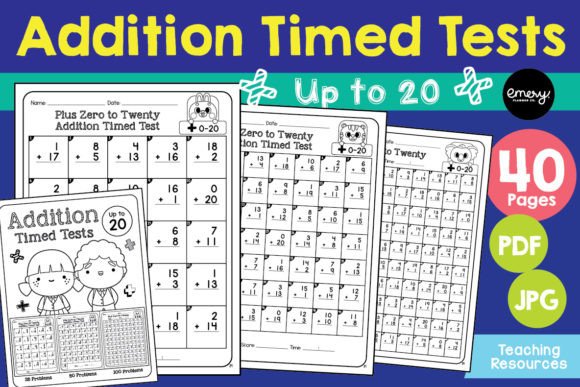
At its core, this resource is about building speed and confidence with basic arithmetic. Its three-tiered structure—25, 50, and 100 problem tests—provides a clear progression, a concept familiar to any designer working on user onboarding or curriculum-based content. The inclusion of a cover, table of contents, and answer keys demonstrates a commitment to user experience (UX), ensuring the end-user, whether a teacher or parent, can navigate and utilize the materials effortlessly. This thoughtful organization is a benchmark for any digital product or print design project.
Practical Applications for Creators and Educators
While designed for math practice, the underlying template and principles of this pack have broad applications for professionals in creative fields:
- Branding & Identity Systems: The consistent, black-and-white format establishes a strong, reliable visual identity. Designers can study this approach for creating cohesive brand guidelines or stationery sets where consistency is paramount.
- Marketing & Social Media Graphics: The clear visual hierarchy—distinguishing problem sets from answer keys—is a masterclass in creating scannable social media graphics or marketing materials where information must be absorbed quickly.
- Editorial & Web Design: The clean layout and ample white space reflect modern editorial design and web design trends, prioritizing readability and reducing cognitive load, which is crucial for UI design.
- Packaging & Merchandise: The functional, no-fuss aesthetic is ideal for packaging design for educational products or merchandise where the content's utility is the primary selling point.
Evaluating and Using Functional Design Assets
When selecting or creating assets like these, several key factors ensure they integrate seamlessly into a broader design workflow:
- Consistency & Scalability: The PDF and JPEG formats at 8.5x11 inches guarantee consistency across print and digital use. Always check that assets are vector-based or high-resolution to maintain quality at scale.
- Readability & Typography: The choice of a clean, sans-serif typeface enhances readability, a non-negotiable in UX design. The uniform font size and weight create a calm, focused environment for the user.
- Color & Composition: The monochromatic palette is a strategic design choice. It minimizes distraction, lowers printing costs, and ensures the content itself remains the focal point, demonstrating how a restrained color palette can be powerful.
Ultimately, resources like the Subtraction Timed Tests | Within 20 pack underscore a fundamental truth in design: the most effective work often lies in perfecting the basics. By applying principles of visual hierarchy, user-centric organization, and aesthetic restraint, creators can develop assets that are not only beautiful but profoundly useful. Whether for an educational worksheet, a corporate presentation, or a digital marketing campaign, the thoughtful curation of functional design elements is what elevates a project from merely informative to truly impactful.