Math Fact Fluency: Designing Effective Timed Tests
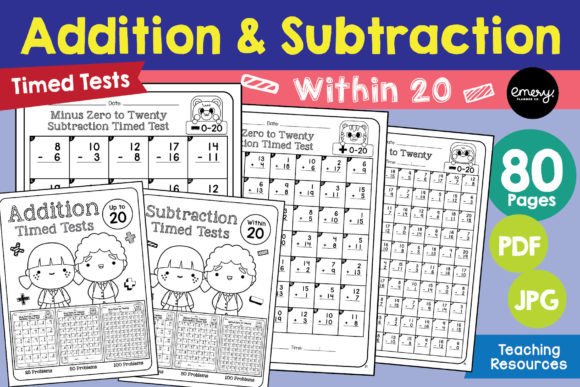
In the landscape of educational design, the most impactful tools are those that seamlessly blend rigorous functionality with clear, uncluttered aesthetics. This principle is perfectly embodied in the Addition Timed Tests | Within 20 pack, a resource engineered not just for mathematical practice but as a model of purposeful visual communication. For designers and creators, understanding how such assets are constructed offers valuable lessons in creating materials that drive engagement, measure progress, and communicate with absolute clarity.
The Visual Architecture of Learning
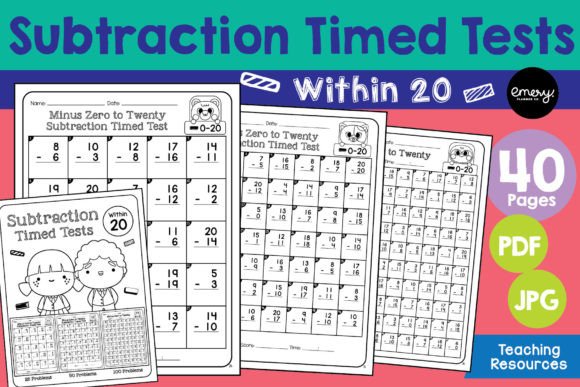
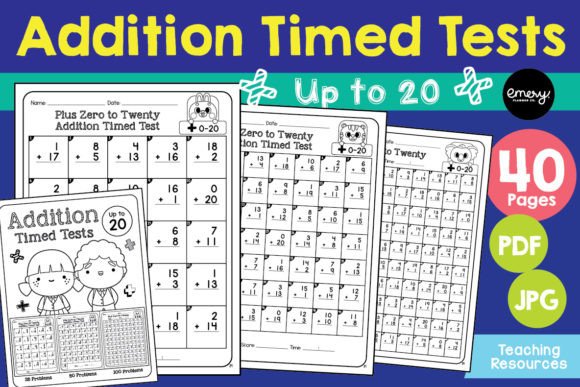
At its core, this collection of timed tests is a study in effective visual hierarchy and information design. The structure—offering 25, 50, and 100 problem sets—isn't arbitrary; it's a scalable system designed for progressive challenge and measurable outcomes. From a design workflow perspective, this modularity is key. It allows educators and parents to select the precise tool for a specific goal, much like a designer chooses between a single social media graphic or a full brand identity suite. The black and white, print-ready format prioritizes accessibility and cost-effectiveness, ensuring the focus remains squarely on the content and the user's performance.
Practical Applications Beyond the Classroom
While its primary function is educational, the principles behind this resource have direct parallels in professional creative projects. Consider its applications:
- Brand Identity & Consistency: The uniform layout of each test page reinforces a consistent user experience, a fundamental tenet of strong brand identity. Each interaction with the material is predictable and reliable.
- Editorial & Print Design: The clean typographic treatment and grid-based problem layout demonstrate how to manage dense numerical data with readability, a skill crucial for financial reports, catalogs, and instructional manuals.
- UI/UX Design: The progressive difficulty (25 to 100 problems) mirrors user journey mapping, guiding a user from introductory to advanced tasks within a controlled, intuitive framework.
- Packaging & Merchandise: The efficient use of space and the high-contrast, monochrome palette are lessons in designing for limited real estate, ensuring messages are legible and impactful at any scale.
Key Principles for Selecting Educational Design Assets
When evaluating resources like Addition Timed Tests | Within 20 or any visual asset for a project, several design-centric factors should guide your choice:
- Clarity and Readability: Typography must be impeccably clear. The sans-serif fonts typical in such materials ensure numerals are unambiguous, which is vital for both speed tests and any interface where quick data parsing is needed.
- Scalable Structure: Look for assets that offer tiered options. This allows the design to adapt to different contexts, from a quick activity to an in-depth assessment, much like a responsive website adapts to different screens.
- Visual Hierarchy: A well-designed sheet uses space, alignment, and subtle weighting to guide the eye from the student's name field to the problem set, and finally to the answer key. This same principle directs users on a website or through a brochure.
- Aesthetic Restraint: The absence of superfluous color or decorative elements is a strength. It minimizes cognitive load, allowing the user to focus entirely on the task. This "less is more" approach is central to modern aesthetics and professional presentation.
Ultimately, whether you are designing a logo, a social media campaign, or an educational worksheet, the goal is the same: to facilitate a specific, successful interaction. Thoughtful design choices—consistent grids, intentional typography, and a clear visual hierarchy—transform functional content into an experience that is both beautiful and effective. Investing in high-quality creative assets, much like this comprehensive test pack, ensures that your work communicates with precision, builds trust through its professionalism, and achieves its intended purpose with elegant efficiency.