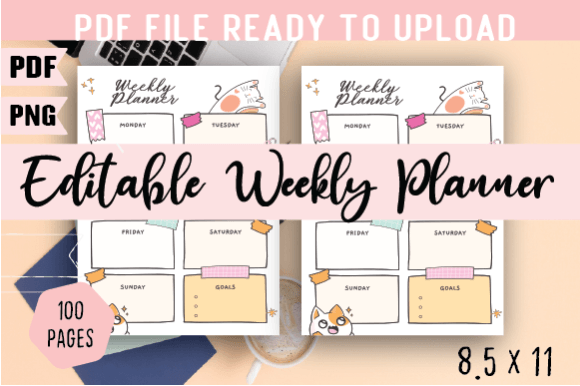
Editable Weekly Planner: A Designer's Tool for Structure & Style
In the fast-paced world of graphic design and creative project management, maintaining a clear visual and operational workflow is paramount. An Editable Weekly Planner Interior serves as more than just a scheduling tool; it is a foundational asset for organizing complex creative projects, from brand identity development to multi-channel marketing campaigns. By integrating a structured yet flexible planning system into your routine, you establish a framework that enhances productivity, ensures deadline adherence, and maintains the high-quality output expected in professional design work.
Practical Applications in Modern Design Workflow
The utility of a well-designed weekly planner extends across numerous facets of the creative and business landscape. Its clean layout and minimalist aesthetic make it a versatile component in various professional contexts.
- Brand Identity & Consistency: Use the planner to schedule and track brand touchpoints, ensuring visual consistency across logo design, color palette applications, and typography usage across all materials.
- Digital Marketing & Social Media: Plan content calendars, campaign launches, and social media graphics production, aligning posts with broader marketing strategies and visual trends.
- Client Project Management: Outline milestones for web design, UI/UX projects, or packaging design, breaking down complex tasks into manageable weekly goals.
- Editorial & Presentation Design: Organize the production timeline for editorial layouts, pitch decks, or professional presentations, ensuring all visual elements are cohesive and on schedule.
Leveraging Flexibility for Creative Control
A key advantage of a digital, printable planner is its inherent flexibility. As a creative asset, it can be adapted to suit specific project needs or personal aesthetic preferences. The ability to print on demand—whether for a desk planner, a client-facing schedule, or a team meeting agenda—provides supreme control over the final output. This adaptability supports a dynamic design workflow, allowing for adjustments in real-time without the constraints of pre-printed materials. Consider it a foundational element in your toolkit, much like a versatile typeface or a scalable logo design, ready to be implemented wherever structure is needed.
Integrating with Your Creative Systems
When selecting such a resource, evaluate its compatibility with your existing systems. A minimalist weekly schedule with a clear visual hierarchy ensures readability and reduces cognitive load, allowing you to focus on the creative task at hand. Look for features that support your goals, such as ample space for notes or a layout that complements your preferred method of time-blocking. This thoughtful selection process mirrors the care taken when choosing a color palette or designing a user interface—it’s about finding the tool that seamlessly integrates into and elevates your process.
Ultimately, incorporating a structured planning tool like this into your practice reinforces professional discipline. It provides the scaffolding upon which creative ideas can be built and executed efficiently. By managing your time and tasks with the same precision you apply to your visual designs, you create a harmonious balance between logistical organization and artistic innovation, leading to more polished, impactful, and successful creative outcomes.