Halloween Color by Number Worksheets: Practical Math Practice
When you're planning educational activities, especially around a holiday like Halloween, the goal is to find that sweet spot between engagement and genuine learning. You want something that captures the excitement of the season while delivering solid, curriculum-aligned practice. This is where a well-designed resource like Halloween Color by Number Worksheets becomes incredibly valuable. It’s not just a busywork page; it's a structured tool that leverages the fun of coloring to build fluency in single-digit addition and subtraction facts, a foundational skill for young learners.
Visual Design and Educational Appeal
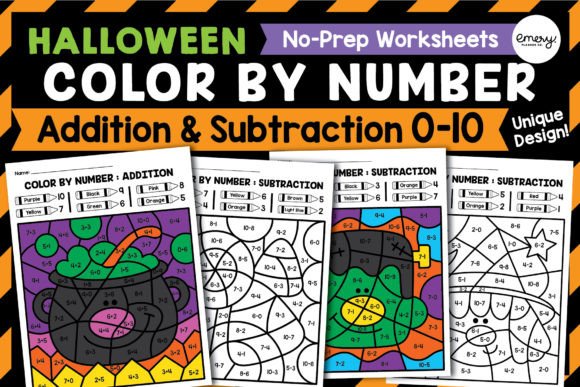
The effectiveness of these worksheets starts with their visual design. Each page presents a fun, Halloween-themed image—perhaps a friendly ghost, a smiling pumpkin, or a quirky bat—divided into sections. Each section is labeled with a simple math problem from the 0-10 range. The visual hierarchy is clear: the problem is prominent, and the corresponding color key is easy to follow. This design does more than just look cute; it guides the child's cognitive process. They must solve the problem to find the answer, then match the answer to the correct color, and finally apply that color to a specific area. This multi-step process reinforces the math fact through repetition and association, making the learning more tactile and memorable than a standard worksheet of equations.
The personality of these Halloween Color by Number Worksheets is approachable and supportive. The black-and-white format is a practical choice, eliminating color ink costs and making them accessible for any classroom or home printer. The high-resolution 300 dpi ensures crisp lines for coloring, and the 8.5x11 inch standard dimension fits perfectly into folders and binders. For a teacher, designer creating educational materials, or a parent homeschooling, these aren't just pages; they're reliable design assets for a specific educational purpose. The inclusion of both PDF and JPEG files adds a layer of flexibility, allowing for easy digital distribution or integration into other projects.
Strategic Applications in Learning Environments
Understanding where and how to use these worksheets is key to maximizing their impact. They are a versatile tool that fits seamlessly into various parts of a child's learning routine. Think of them as a specialized typeface for math practice—not for letters, but for numbers and operations. Just as you'd choose a serif font for readability in long-form text or a bold display font for a headline, you choose these worksheets for targeted skill-building in a low-pressure, enjoyable format.
- Independent Practice & Morning Work: The self-checking nature of color by number is perfect for independent work. A child can start the moment they arrive in the morning or during a quiet center time, allowing the teacher to focus on small groups. The activity builds confidence as students see their correct answers revealed through the emerging picture.
- Math Centers & Bell Ringers: In a structured math center, these worksheets provide a focused, engaging task that reinforces the week's fact fluency goals. As a bell ringer, a single page can settle the class and transition minds into math mode in a fun, low-stakes way.
- Substitute Plans & Homework: For a substitute teacher, having a clear, meaningful, and engaging activity is gold. These worksheets are easy to explain and manage. As homework, they offer a more appealing alternative to a drill sheet, encouraging practice without the associated dread.
- Distance Learning & Hybrid Models: The digital file format makes this resource inherently adaptable. Teachers can assign the JPEG or PDF through a learning platform. Students can complete it on a tablet using a drawing app or print it at home. This maintains the hands-on, creative aspect of the activity even in a virtual setting.
Evaluating and Implementing the Resource
For creators, marketers, or business owners in the educational space, evaluating a resource like this goes beyond just the cute graphics. It’s about assessing its utility as a professional tool. Here’s a practical lens for looking at Halloween Color by Number Worksheets and similar products:
- Alignment with Learning Objectives: Does it practice a specific, measurable skill? Here, the focus on single-digit addition and subtraction (numbers 0-10) is clear and aligned with early elementary standards. This specificity is a hallmark of a well-designed educational product.
- Design for Usability: Is the layout intuitive for a child? Can they easily distinguish between the problem, the answer key, and the coloring areas? The clean, uncluttered design of these worksheets is a good example of user-centered design in educational materials.
- Practicality and Accessibility: Consider the file formats, print quality, and ink requirements. A resource that is black-and-white, high-resolution, and provided in multiple formats reduces barriers to use for a wide range of users, from classroom teachers to parents with home printers.
- Brand Consistency for Sellers: If you're a teacher-author or small business selling educational resources, your products are your brand identity. Offering a cohesive set—like the included addition and subtraction sets with answer keys—demonstrates professionalism and makes your store a go-to for reliable materials. It’s about building a library of consistent, high-quality design assets.
Ultimately, the power of a tool like the Halloween Color by Number Worksheets lies in its ability to make repetitive practice feel like a creative game. It leverages modern educational design principles—engagement, multi-sensory learning, and immediate visual feedback—to help children build essential math fluency. Whether you're a teacher looking for effective center activities, a parent seeking fun homework options, or a creator developing your line of educational products, focusing on resources that marry clear educational goals with thoughtful, practical design is the most direct path to supporting successful learning.