Understanding the "This Book Belongs to" Cover Page for KDP
When starting a low-content publishing business, the difference between a product that sells and one that sits on the digital shelf often comes down to the details. Specifically, it is about the perceived value. When a customer purchases a journal, planner, or notebook on Amazon KDP or Etsy, they want to feel that they have bought a professional tool, not just a stack of blank paper. This is exactly why the interior design of your book matters just as much as the cover. The "This Book Belongs to" page is the very first thing a customer sees when they open your book. It sets the tone for the entire user experience. If that first page looks generic, pixelated, or poorly aligned, it undermines the quality of the rest of the interior.
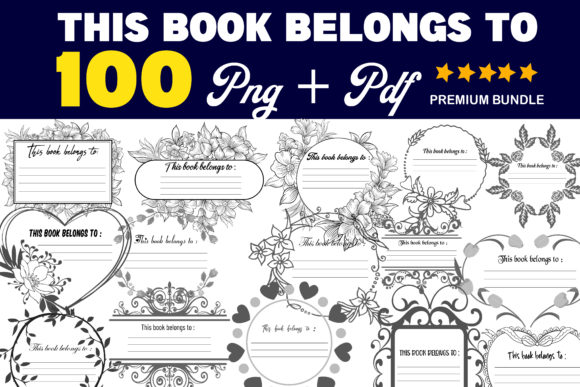
The asset we are discussing today is a downloadable set of 100 pages in both PNG and PDF format, specifically designed for 8.5" x 11" books. While this might sound like a simple graphic, it is actually a foundational design asset for your business. Having a library of 100 distinct, high-quality "ownership" pages allows you to diversify your portfolio quickly. Instead of creating a new interior design from scratch every time you launch a niche notebook, you can simply select a page from this collection that matches the specific vibe of your project. Whether you are designing a gratitude journal for wellness enthusiasts or a logbook for mechanics, the style of that introductory page signals to the user that the product was curated with care.
The Psychology of the First Page: Brand Identity and Perception
In the world of publishing and design, we talk a lot about "brand identity." However, for low-content books, the brand identity is often established through typography and layout rather than just a logo. The "This Book Belongs to" page serves a dual purpose: it is functional, allowing the owner to claim the book, but it is also emotional. It creates a sense of ownership and personal connection.
When you utilize high-quality graphics for this page, you are influencing the visual hierarchy of the book. Visual hierarchy is how we arrange elements to show their order of importance. Even on a title page, the way the text is spaced, the font style chosen, and the graphic elements surrounding the words tell a story. If you are selling a sophisticated planner for executives, you need a layout that screams professionalism and minimalism. Conversely, if you are selling a sketchbook for artists, you might want a layout that feels more organic and expressive. This collection of 100 pages provides that versatility, allowing you to match the visual personality of the interior to the cover design and the target audience.
Consistency is another major factor in building a recognizable brand on platforms like Etsy or Amazon. If a customer buys a fitness tracker from your shop and loves the interior design, they are likely to look for other products in your store. If your "Belongs to" pages and interior layouts are consistent in quality and style, you build trust. You move from being a random seller of PDFs to a publisher of premium design assets. This consistency signals to the buyer that you understand modern typography and design trends, which increases their willingness to pay a higher price for your digital or print products.
Practical Application: Integrating the Asset into Your Workflow
For designers and entrepreneurs, time is the most valuable resource. Manually designing a unique title page for every single niche you enter is time-consuming and often unnecessary when you have high-quality templates at your disposal. This collection of 100 PNG and PDF files is designed to streamline your production process.
Let’s look at how you can practically use these assets. If you are a KDP publisher, you can easily upload the PDF interior directly into your book setup. The dimensions are standardized at 8.5" x 11", which is one of the most popular sizes for journals and planners. This eliminates the headache of resizing and worrying about bleed settings for this specific page. If you are creating digital products for Etsy—such as printable planners that customers download and print at home—the PDF and PNG formats ensure that the quality remains crisp regardless of the user's printer settings.
Furthermore, these assets are invaluable for those offering services on platforms like Fiverr. If you are a freelancer creating custom journals for clients, you can use these high-quality pages as a base to speed up your turnaround time while still delivering a premium product. You can combine these pages with different fonts and graphic elements to create custom interiors that look like they took hours to design, when in reality, the heavy lifting of layout and spacing has already been done for you.
Design Versatility and Commercial Use
One of the most common challenges in low-content publishing is finding assets that are versatile enough to work across multiple niches. A floral design might work for a gardening journal but looks out of place in a cryptocurrency logbook. This is where having a large collection of 100 variations becomes a strategic advantage. It allows you to curate the interior to fit specific sub-niches.
Consider the commercial aspect of these design assets. When you purchase a resource like this, you are investing in a tool that can be used across an entire catalog of books. The cost per use is incredibly low when you consider that you can use these layouts for personal projects, client work, and commercial sales on KDP and Etsy. The key to success in the digital product space is volume and variety. By having a go-to library of professional "Belongs to" pages, you can rapidly test new niches.
For example, imagine you want to test the market for "Cookbooks for Hikers." You can pair a rugged, outdoor-themed cover with a clean, readable interior. Using a high-quality title page from this collection ensures that the first impression is positive. If that book sells well, you can quickly adapt the same interior style to "Cookbooks for Campers" or "Trail Logs," simply by swapping out the cover and tweaking a few details. This agility is what separates successful digital publishers from those who struggle to gain traction.
Ultimately, the goal is to create a product that feels complete. A "This Book Belongs to" page might seem like a small detail, but it is the handshake between the creator and the consumer. It says, "I care about the details of this product." By using professional, high-resolution assets, you ensure that your books meet the standards of modern publishing, leading to better reviews, repeat customers, and a sustainable creative business.