Reading Trackers: Your Complete Guide to Book Tracking
Keeping track of what you read shouldn't feel like homework. Whether you're a casual reader working through your bedside stack or someone who devours fifty books a year, a solid reading tracker transforms scattered notes into something meaningful. The collection I'm sharing here includes four distinct trackers designed for exactly that purpose — giving you a practical, beautiful system you can actually stick with.
What Makes These Reading Trackers Different
Most reading logs you find online are either too minimalist to be useful or so cluttered they overwhelm you before you've written your first title. These trackers strike a middle ground. Each one offers enough structure to capture the details that matter — dates, ratings, genres, brief notes — without demanding you fill in fields you'll never use.
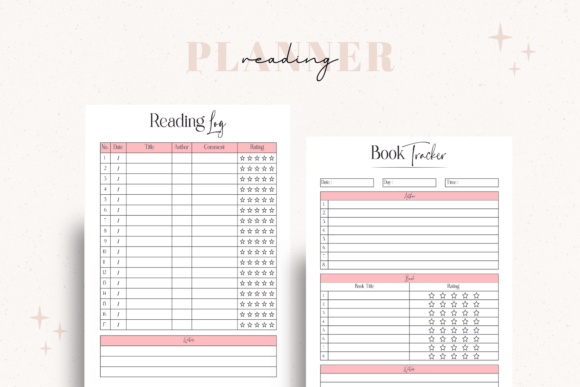
The four trackers in this collection each serve a slightly different purpose. The Book Tracker works as a master overview, letting you see your entire reading history at a glance. Think of it as your bookshelf in document form. The Reading Log goes deeper, providing space for more detailed entries about each book you finish. Together, they cover both the bird's-eye view and the close-up details that serious readers want to preserve.
Visually, these designs lean into clean, modern aesthetics. The layouts use thoughtful spacing, readable fonts, and enough white space to keep things from feeling cramped. They look polished enough to hang on a wall or pin to a vision board, but they're functional first. No decorative elements that eat up writing space. No ornate borders that make printing expensive.
Three Formats for Every Workflow
Here's where the practical value really shows up. Each reading tracker comes in three formats, and that's intentional — because not everyone uses the same tools or has the same workflow.
PDF files are ready for instant printing. Pull them up, hit print, and you've got a physical tracker sitting on your desk within minutes. This works especially well for people who prefer writing by hand, who keep a reading journal, or who want something tangible pinned above their workspace. The PDFs are formatted for standard paper sizes, so you won't waste time resizing or troubleshooting printer margins.
AI files (Adobe Illustrator format) exist for the designers and tinkerers in the audience. If you've got a specific brand color palette you want to match, or you'd prefer a different typeface to match your personal aesthetic, the AI files give you full editability. Change colors, swap fonts, adjust spacing, resize elements — the design is yours to modify. This is particularly useful for small business owners who might want to create branded reading challenge materials for their audience, or for content creators who want trackers that visually align with their existing templates.
JPG files offer the flexibility of instant digital use with the ability to resize. Drop them into a digital planner, use them as backgrounds in note-taking apps, or scale them for social media posts. If you're a blogger documenting your reading journey or a bookstagrammer sharing monthly wrap-ups, JPGs integrate easily into your existing content workflow.
Where Reading Trackers Actually Work Best
The use cases extend well beyond personal reading logs, though that's the obvious starting point. Let me walk through some scenarios where these trackers genuinely earn their keep.
Personal reading goals. If you set annual reading targets — say, thirty books this year — a tracker gives you visual accountability. There's something motivating about filling in a row or checking a box. It turns an abstract goal into a concrete record.
Book clubs and reading groups. Organizers can print trackers for members, creating a shared sense of progress. The clean designs work well as handouts at meetings or as digital downloads shared through group chats and email threads.
Educational settings. Teachers, tutors, and homeschool parents often need structured reading logs for students. These trackers provide that structure without feeling juvenile. The designs work for adult learners and younger readers alike.
Content creation and social media. Book bloggers, BookTok creators, and Bookstagram accounts regularly share their reading stats. Having a well-designed tracker makes those posts more visually appealing and gives your content a consistent, professional look. When your reading log becomes part of your visual brand, it strengthens recognition and audience engagement.
Small business and marketing applications. If you run a bookstore, a literary subscription box, or any brand that touches the reading community, offering printable reading trackers as a free download is a smart lead magnet. The AI files make it easy to add your logo, adjust colors to match your brand identity, and distribute something that feels genuinely valuable rather than promotional.
Practical Tips for Getting the Most from Your Trackers
Print on quality paper if you're going physical. Standard copy paper works fine, but cardstock holds up better if you're pinning it to a board or carrying it in a planner. For the PDFs, select "actual size" in your print settings rather than "fit to page" to preserve the intended layout proportions.
If you're editing the AI files, start with color changes before touching layout elements. Swapping the color palette takes seconds and immediately personalizes the design. Font changes come next — just make sure any replacement typeface maintains similar readability at the sizes used in the original layout. A decorative script font might look beautiful on screen but become illegible when printed at small sizes.
For digital use, the JPGs work well imported into apps like GoodNotes, Notability, or Notion. Resize them to fit your digital planner pages, and you've got a cohesive system that lives alongside your other planning tools.
Consider printing multiple copies of the Book Tracker if you read across different formats — one for physical books, one for audiobooks, one for e-books. Segmenting your tracking this way gives you cleaner data and makes it easier to see where your reading habits actually land.
Building a Reading Habit That Sticks
The best reading tracker is the one you'll actually use. That sounds obvious, but it's worth stating plainly. A beautifully designed tracker sitting untouched in a drawer accomplishes nothing. Start simple — fill in what you read and when. Add ratings if that motivates you. Include brief notes if you enjoy reflecting on what you've consumed. Don't turn it into a chore.
These four trackers were designed to lower the barrier between wanting to track your reading and actually doing it. The layouts are intuitive enough that you won't need instructions. The formats are flexible enough that they'll fit into whatever system you already have running. And the designs are polished enough that using them feels like a small pleasure rather than an administrative task.
You can find additional freebies and design resources by joining the newsletter at Aneta Design Store. New downloads drop weekly, and they're always free for subscribers.